
Losing your central vision changes daily life in ways most people don’t expect — reading a menu, recognizing a friend’s face, or driving at night can suddenly become difficult. This is the reality for millions of adults over the age of 50 with macular degeneration.
To reduce the effects of this condition, many patients in the US and Canada search for alternatives outside their own healthcare systems for faster and more affordable care. That is why the popularity of ophthalmologists in Tijuana has increased in recent years, as they are a practical alternative for specialized care close to the border.
This article breaks down what macular degeneration actually is, the treatment options available in Tijuana, and the practical steps for choosing a retina specialist you can trust so you can make an informed decision.
Why treating macular degeneration early matters
Macular degeneration affects the macula, the part of the retina responsible for sharp, central vision used for reading, driving, and recognizing faces. Even when this condition doesn’t cause total blindness, it can reduce the detailed vision that helps you with your daily activities.
Therefore, the earlier it’s caught and managed, the better the outcome tends to be. Identifying which of the two types of macular degeneration is causing your symptoms is essential to receiving the best treatment:
- Dry macular degeneration: Progresses slowly and causes gradual blurring of central vision. It occurs when the cells in the macula slowly break down, leading to the accumulation of yellow deposits called drusen under the retina.
- Wet macular degeneration: It’s the less common but more aggressive type. Identified by the sudden distortion in central vision caused by abnormal blood vessels leaking fluid or blood under the retina.
Warning signs of macular degeneration
Knowing the early signs can make the difference between receiving a timely diagnosis and experiencing unnecessary vision loss. Common warning signs include:
- Straight lines start to look wavy or bent
- A blurry or dark spot in the center of the vision
- Colors appear less vivid than before
- Needing more light to read or do close-up tasks
- Trouble recognizing faces
- Slow adjustment when moving from bright to dim light
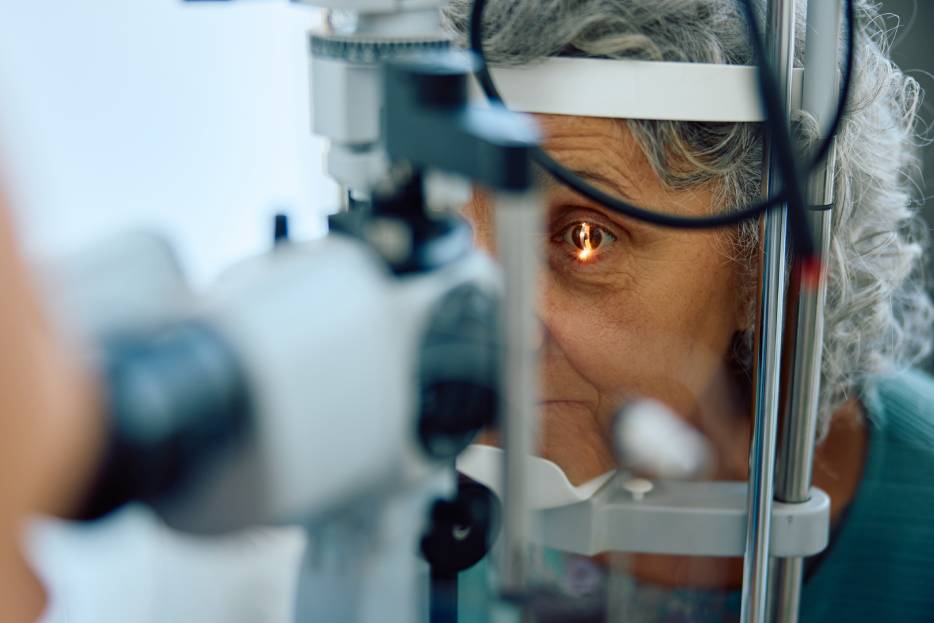
If you notice any of these signs, especially a sudden change, we recommend contacting your ophthalmologist as soon as possible for an eye examination to help prevent further vision loss and disease progression.
How specialists diagnose macular degeneration
A retina specialist in Tijuana will typically combine professional tools and methods to get a full picture of your eye’s condition. Here are the most common tests to identify the type of macular degeneration and its progression.
| Test | What it shows |
| Dilated eye exam | Allows the ophthalmologist to examine the retina and other structures at the back of the eye |
| Optical coherence tomography (OCT) | Produces detailed cross-sectional images of the retina to evaluate structural changes, retinal thickness, and the extent of damage |
| Amsler grid test | Assesses central vision and helps detect visual distortions or blind spots commonly associated with macular degeneration |
| Fluorescein angiography | Evaluates the retinal blood vessels to identify abnormal leakage, blockages, or the growth of new blood vessels |
Types of macular degeneration treatments available in Tijuana
Ophthalmology clinics in Tijuana, like other international clinics, also offer evidence-based treatments, methods, and state-of-the-art technology to help you improve your vision health with procedures such as cataract surgery.
The most common macular degeneration treatments available at these clinics are the following:
Anti-VEGF injections
This is the standard first-line treatment for wet macular degeneration. A specialist injects medication, such as ranibizumab (Lucentis), aflibercept (Eylea-Wetlia) or faricimab (Vabysmo), directly into the eye to stop abnormal blood vessels from growing and leaking.
Most patients need a series of injections, often monthly at first, then spaced out over time as the eye responds. It doesn’t cure the underlying condition, but it’s highly effective at stopping further vision loss and can even improve vision in many cases.
Laser therapy
Laser treatment, sometimes called photocoagulation, uses a focused beam to seal off leaking or abnormal blood vessels. It’s less commonly used than Anti-VEGF injections, but it’s still an option in specific cases, particularly when blood vessels are located away from the very center of the macula.
Photodynamic therapy (PDT)
PDT combines a light-sensitive medication, injected into the bloodstream, with a low-level laser that activates the drug only in the targeted area of the retina. This destroys abnormal blood vessels with less damage to surrounding healthy tissue than traditional laser therapy.
Nutritional management and monitoring
For dry macular degeneration, especially in earlier stages, care tends to center on a steady nutritional program paired with ongoing monitoring to support the best possible outcome over time. The specifics can vary depending on the patient’s situation and a specialist’s recommendations, but the following are generally part of appropriate care:
- AREDS2 vitamin and mineral supplements, shown to slow progression in some patients
- Regular monitoring with OCT scans to identify shifts toward the wet form
- Dietary changes, smoking cessation, and UV protection to reduce risk factors
Why international patients choose Tijuana for macular degeneration treatment
Tijuana has grown into one of the more established destinations for cross-border eye care, as it offers a diverse range of benefits for international patients that go beyond lower prices.
Easy access for patients living near the border
For patients in San Diego and across Southern California, Tijuana eye clinics are often closer than specialists in their own city. Many people drive across, attend their appointment, and return home the same day without lengthy travel days or major disruption to their daily lives.
Shorter waiting times for retina evaluations
In many parts of the US and Canada, getting an appointment with a retina specialist can take weeks, especially for non-urgent evaluations.
Ophthalmologists in Tijuana who specialize in international patients are generally set up for faster scheduling, which matters when a condition like macular degeneration can progress fast to permanent vision loss.
Personalized support for international visitors
Another benefit is that established clinics in Tijuana focused on international patients typically offer:
- Bilingual staff and doctors
- Help coordinate travel logistics, like appointment timing and lodging recommendations
- Transfer of medical records and imaging to and from your home doctor
How to choose the right retina specialist in Tijuana
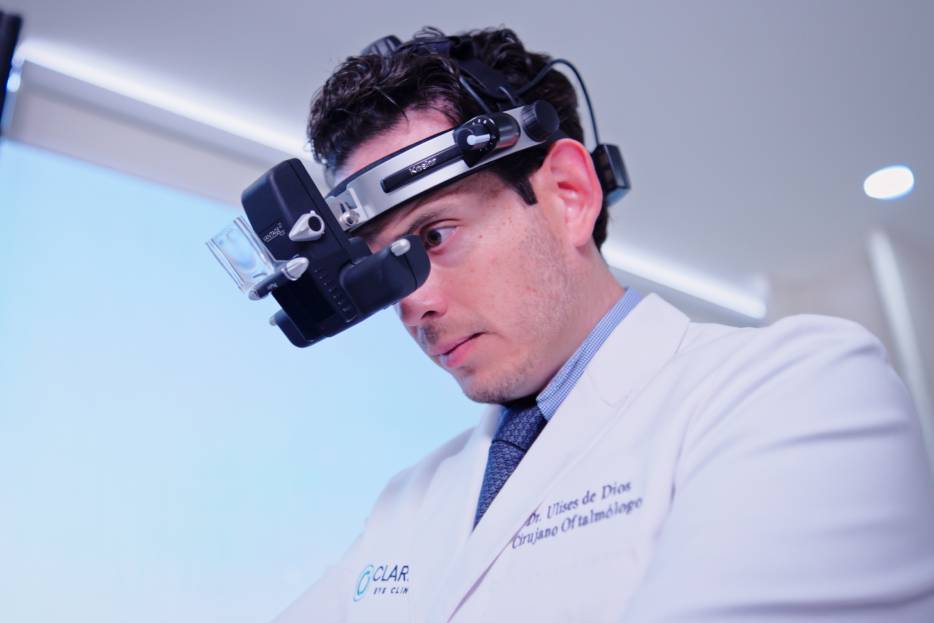
Not all clinics offer the same level of care. These are some of the factors you need to consider before choosing the best ophthalmologist for your treatment:
- Board certification in ophthalmology, with subspecialty in retina
- Experience treating macular degeneration
- Modern diagnostic equipment
- Transparent pricing
- Verifiable reviews or referrals
- Clear follow-up plan
FAQ’s about macular degeneration treatment
Can macular degeneration be reversed?
Not fully. Current treatments are designed to slow progression and, in the case of wet macular degeneration, often improve vision that was lost due to fluid or bleeding. But the underlying degeneration of retinal cells, especially in advanced dry macular degeneration, cannot be undone with available treatments.
Is macular degeneration treatment painful?
No, most patients describe it as mildly uncomfortable. For example, Anti-VEGF injections use numbing drops beforehand, and the injection itself takes just a few seconds. Laser and PDT procedures are also done with local anesthesia or numbing drops.
How soon should treatment begin after diagnosis?
For wet macular degeneration, treatment should start as soon as possible, since vision loss can progress quickly. For dry macular degeneration, especially in early stages, specialists recommend monitoring and supplements before immediate treatment, but follow-up visits should be kept on schedule.
What is the most common treatment for wet macular degeneration?
Anti-VEGF injections are the standard treatment for wet macular degeneration. They’re the most studied and most widely used option for stopping abnormal blood vessel growth in the retina.
What does macular degeneration treatment cost in Tijuana?
Costs vary by clinic, the specific drug used, and how many injections or sessions are needed. In general, treatment in Tijuana costs noticeably less than equivalent care in the US. Before committing to any treatment plan, you can reach out directly to the clinic of your choice and request an itemized quote.